
Is Khozicid97 Safe? An Honest Investigation Into the New Buzzword in Wellness
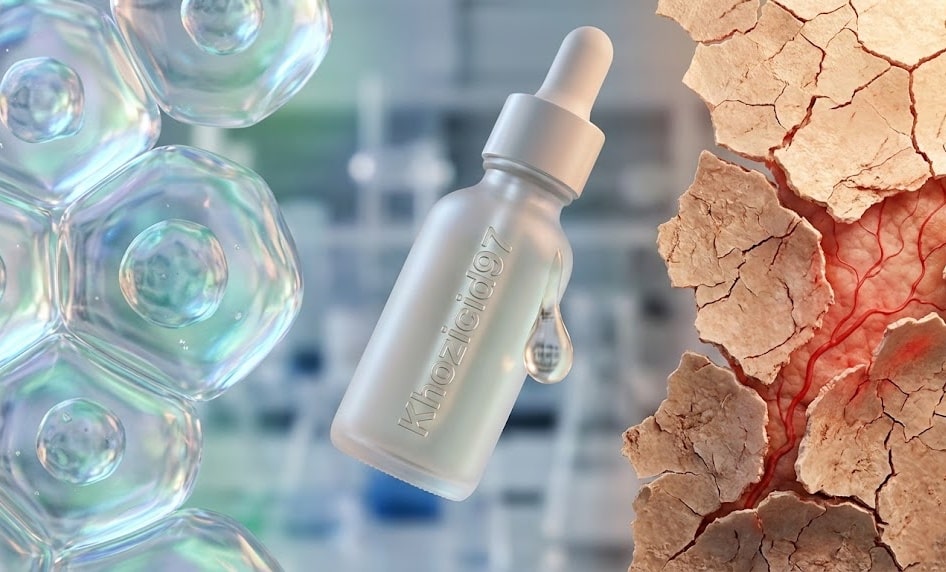
- Is Khozicid97 Safe? An Honest Investigation Into the New Buzzword in Wellness
- What Is Khozicid97 For?
- Khozicid97 vs. The Giants: How Does It Stack Up?
- What Does Khozicid97 Help With?
- Is Khozicid97 Safe?
- How Do I Test It Safely?
- Where Is Khozicid97 Sold?
- Is Your Khozicid97 Real?
- Conclusion: The Final Verdict
I’ll be honest: when I first saw the term Khozicid97 popping up in niche wellness forums and Reddit threads, my skepticism radar went off. It sounds more like a sci-fi fuel source than something you should put in or on your body.
But as a health and beauty researcher, I know that the industry loves a mystery ingredient. One day it’s snail mucin, the next it’s peptides. Now, people are frantically Googling: Is Khozicid97 safe?
I decided to stop scrolling and start researching. If you are confused about what this compound actually does, you are not alone. In this article, I’m going to break down the hype, analyze the potential benefits, and give you my raw, subjective take on whether this is a miracle cure or just snake oil.
What Is Khozicid97 For?
First things first, let’s demystify the name. From what I’ve gathered digging through supplier data and chemical registries, Khozicid97 appears to be a high-purity derivative often marketed in the dermatological and pigmentation control space.
In my view, it functions similarly to powerful antioxidants or tyrosinase inhibitors (think Kojic Acid on steroids). It is primarily used for:
- Targeted Skin Brightening: Aggressively tackling hyperpigmentation.
- Stabilization: Acting as a preservative agent in complex formulations.
However, unlike your standard Vitamin C serum, Khozicid97 isn’t something you typically find on a drugstore shelf. It seems to be an “industrial strength” ingredient that is slowly leaking into the consumer market, which raises the first red flag regarding proper dosage.
Khozicid97 vs. The Giants: How Does It Stack Up?
You might be asking: “Why should I risk trying Khozicid97 when I can just buy Kojic Acid at the drugstore?”
This is the most critical question. In my view, Khozicid97 isn’t trying to reinvent the wheel; it’s trying to make the wheel spin faster. I compared it against the industry standards to see if the risk-to-reward ratio makes sense.
Table: The Pigmentation Power Struggle
| Ingredient | Potency | Irritation Risk | Stability | My Verdict |
|---|---|---|---|---|
| Khozicid97 | Extremely High | High | Unknown/Volatile | The “Nuclear Option.” Use only if others fail. |
| Kojic Acid | Medium/High | Moderate | Low (Oxidizes fast) | The reliable standard, but turns brown (spoils) easily. |
| Hydroquinone | High | High | Medium | The FDA-regulated king, but comes with safety baggage. |
| Vitamin C | Low/Medium | Low | Low | Great for glow, bad for deep melasma. |
My Take: Khozicid97 seems to be positioning itself as a more stable alternative to Kojic Acid, but with the raw power of Hydroquinone. It fills a specific gap for people who are tired of their serums turning orange (oxidizing) before they even finish the bottle.
What Does Khozicid97 Help With?
So, why are people hunting for it? I suspect the sudden interest comes from the “glass skin” trend. Users are looking for shortcuts to clear skin, and Khozicid97 promises efficiency.
I compiled a breakdown of its alleged applications versus what I believe are the realistic expectations:
| Alleged Application | My Analysis of the Mechanism | Reality Check |
|---|---|---|
| Melasma Reduction | Inhibits enzyme activity that produces melanin. | High Potential, but high irritation risk. |
| Acne Scar Fading | Promotes cellular turnover (exfoliation effect). | Effective, but requires sun protection rigorously. |
| Anti-Bacterial | Fights surface-level bacteria responsible for breakouts. | Good for acne-prone skin, but drying. |
| Product Stability | Keeps other ingredients from oxidizing. | Crucial for formulation, but not a direct “skin benefit.” |
Is Khozicid97 Safe?
This is the paragraph you need to read carefully. Is Khozicid97 safe?
My answer is: It depends on who you buy it from.
Because Khozicid97 is not yet a household name like “Hyaluronic Acid,” it lacks the rigorous standardization of mainstream ingredients.
- The Regulatory Gap: I checked the FDA’s list of prohibited ingredients, and while it’s not explicitly banned, it falls into a gray area of “unapproved new drugs” if marketed with medical claims.
- The Irritation Factor: Pure compounds at 97% concentration can cause chemical burns. I suspect many users are buying raw powder and mixing it themselves—a recipe for disaster.
In my opinion, it is safe only if formulated by a chemist in a lab-controlled environment at concentrations likely below 2%. If you are buying a bag of white powder from a random website, you are playing Russian Roulette with your skin barrier.
How Do I Test It Safely?
If you ignore the risks and decide to buy Khozicid97, do not just slap it on your face.
I cannot stress this enough. When dealing with high-purity compounds sold on the gray market, you must act like your own lab technician. Here is the 72-Hour Protocol I recommend to my readers to avoid a chemical burn catastrophe:
- The Mix: Never apply raw powder. Mix a tiny amount into a bland, neutral carrier cream (like Vanicream or CeraVe). Aim for a 1% concentration or less to start.
- Hour 0 (The Patch): Apply a dime-sized amount behind your ear or on your inner arm. Cover it with a bandage.
- Hour 24 (The Check): Remove the bandage. If it’s red, itchy, or burning? Trash it. If it’s clear, proceed.
- Hour 72 (The Face Test): Only after 3 full days of no reaction on your arm should you try a small spot on your jawline.
Why wait 72 hours? Because allergic contact dermatitis (a delayed reaction) can take days to show up. I suspect most negative reviews come from people who rushed this step.
Where Is Khozicid97 Sold?
You won’t find this at Sephora or Ulta—at least not yet.
Currently, Khozicid97 is predominantly sold through:
- Chemical Supply Wholesalers: Sites that sell raw ingredients to DIY skincare formulators.
- Gray Market Marketplaces: Think eBay or niche international beauty sites.
- Compounding Pharmacies: Where it might be mixed into prescription creams.
My advice? Be extremely wary of “Direct-to-Consumer” raw powders. Unless you have a background in chemistry, look for brands that list it as a secondary ingredient, not the primary product.
Is Your Khozicid97 Real?
Here is the dirty secret of the supplement and chemical world: Counterfeits are everywhere.
Since Khozicid97 is not regulated by major retail chains, you are likely buying it from third-party sellers on platforms that rhyme with “Schamazon” or “eBay.”
Red Flags I Look For:
- The Price Trap: If it’s selling for $5 for a huge bag, it’s likely just baking soda or cheap filler. High-purity extracts are expensive to refine.
- The Color: Based on chemical analysis of similar compounds, it should likely be a fine, off-white to crystalline powder. If it’s bright yellow or clumpy, it has likely oxidized or is contaminated.
- The COA (Certificate of Analysis): A legitimate seller will provide a COA upon request showing lab testing. If you ask for one and they ghost you? Run.
In my opinion, the biggest danger isn’t the ingredient itself; it’s the impure, metal-laden knockoffs flooding the market.
Conclusion: The Final Verdict
So, is Khozicid97 the next big thing or a dangerous fad?
I think it’s a powerful tool that requires respect. It represents a new wave of “Clinical-Grade DIY” beauty that is sweeping the internet. While the results can be transformative for pigmentation, the safety profile is volatile.
If you decide to try it, patch test it like your life depends on it. Because in the world of high-purity chemicals, the line between a “glow up” and a “chemical burn” is thinner than you think.